
DISCOVER HOW TO

ACCELERATE YOUR ORGANISATION’S GROWTH
ACCELERATE YOUR ORGANISATION’S GROWTH
BY CRAFTING POWERFUL AND PURPOSEFUL,
DATA-DRIVEN STORIES

DISCOVER HOW TO
ACCELERATE YOUR ORGANISATION’S GROWTH
ACCELERATE YOUR ORGANISATION’S GROWTH
BY CRAFTING POWERFUL AND PURPOSEFUL, DATA-DRIVEN STORIES
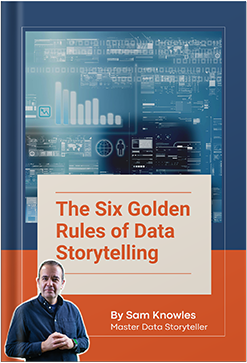
Powerful stories rooted in data are the most persuasive of all. They appeal to both parts of our brain:
The emotional part of our brain that
makes decisions.

The rational part of our brain that justifies the decisions we make.
If you can blend the sometimes ‘fire and ice’ domains of narrative and numbers, the whole really can be more powerful than the sum of the parts. Individuals, teams and companies that embrace the potential of data storytelling are more successful than those that keep the two disciplines apart.
Here is a sneak peek at some of the insights about great data storytelling you'll discover in this FREE report:
The two skills every company should master to improve their corporate and brand communications. (Including the secret formula for gaining impactful influence over your audience).
How asking the right questions ensures you find relevant, useful data and means you can avoid wasting time and effort focusing on the wrong things. (Plus free resources to help you ask smarter questions and surface the data you need to become more insightful).
How to identify genuine insights (profound and useful understandings of what the data means) and move on to address the question “Now what?” (what we should do – and say – as a result).
How organisations can create simple stories but ensure they are captivating for their audience. (Hint: the goal should be to get them to say: “That’s interesting – tell me more”).
Why humans are wired to establish “cause and effect” without verifying it. (Plus why we often look for neat answers, regularity, and patterns in data – even when there aren’t any).
Why many organisations fall foul of the “Curse of Knowledge” and confuse their audiences, resulting in a failure to make your point effectively. (Including the professions most likely to fall foul of the Curse and use boring industry jargon).
The most important research topic any organisation can undertake and why your stories will fall flat if you fail to understand it.
Classic examples of good, bad, and great storytelling, including our explanation of why we’ve rated these examples as such.
Here is a sneak peek at some of the insights about great data storytelling you'll discover in this FREE report:
The two skills every company should master to improve their corporate and brand communications. (Including the secret formula for gaining impactful influence over your audience).
How asking the right questions ensures you find relevant, useful data and means you can avoid wasting time and effort focusing on the wrong things. (Plus free resources to help you ask smarter questions and surface the data you need to become more insightful).
How to identify genuine insights (profound and useful understandings of what the data means) and move on to address the question “Now what?” (what we should do – and say – as a result).
How organisations can create simple stories but ensure they are captivating for their audience. (Hint: the goal should be to get them to say: “That’s interesting – tell me more”).
Why humans are wired to establish “cause and effect” without verifying it. (Plus why we often look for neat answers, regularity, and patterns in data – even when there aren’t any).
Why many organisations fall foul of the “Curse of Knowledge” and confuse their audiences, resulting in a failure to make your point effectively. (Including the professions most likely to fall foul of the Curse and use boring industry jargon).
The most important research topic any organisation can undertake and why your stories will fall flat if you fail to understand it.
Classic examples of good, bad, and great storytelling, including our explanation of why we’ve rated these examples as such.

Impactful communication comes in the form of stories and storytelling.
Combining statistics with stories, numbers with narrative to craft powerful and purposeful, data-driven stories is one important strategy that enables organisations to accelerate growth and have even greater impact.
To learn more - download your free copy of our report now.
All rights reserved.
Privacy Policy | Terms and Conditions
Powered by Team Convertico